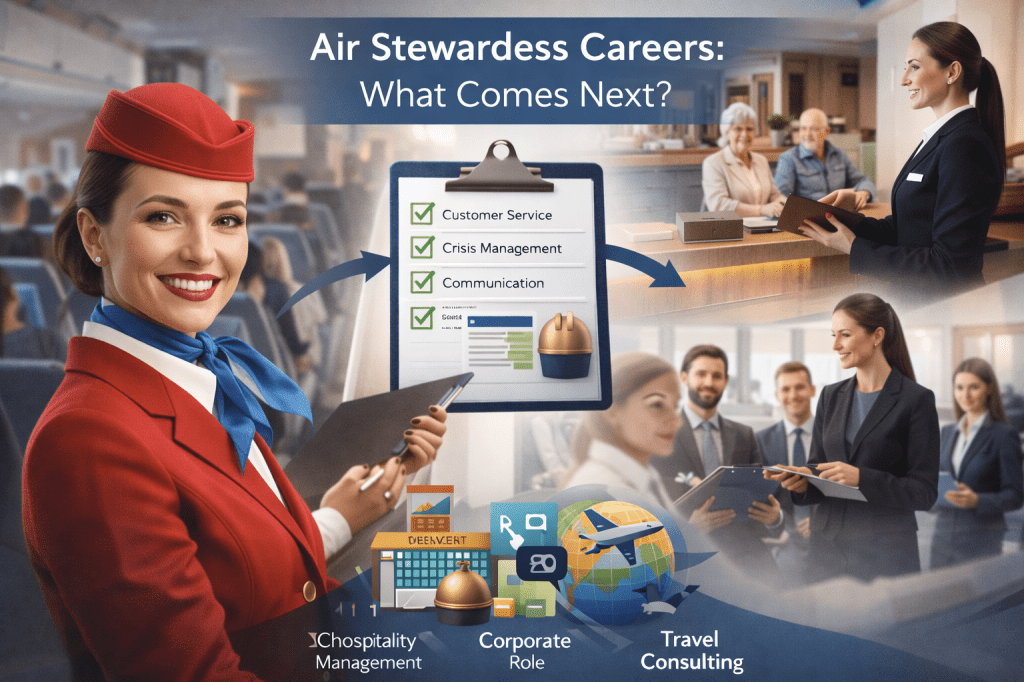
Yesterday I met a friend that used to be air stewardess for long time and now she works in a different sector that she is not fond of it. We were discussing her next career steps. How she can utilize her skills from her days as cabin crew, how she can transfer them into a different role?
Working as an air stewardess (cabin crew) is often seen as glamorous. Travel, international exposure, and dynamic environments attract many young professionals. However, behind the uniform is a demanding role that builds powerful, transferable skills.
This article explores:
- What the job truly involves
- The competencies developed
- Career progression inside aviation
- Smart next steps beyond cabin crew
What Does an Air Stewardess Really Do?
Cabin crew members are not simply service staff. Their primary responsibility is safety.
Core responsibilities include:
- Conducting safety demonstrations and emergency procedures
- Managing in-flight incidents
- Administering first aid
- Ensuring regulatory compliance
- Delivering high-level customer service
Airlines such as Emirates, Qatar Airways, and Ryanair place strong emphasis on discipline, safety standards, and service consistency.
This role demands emotional control, resilience, and professional presence under pressure.
Key Skills Developed as Cabin Crew
An air stewardess develops a strong professional foundation, including:
1. Crisis Management
Handling medical emergencies, difficult passengers, and operational disruptions.
2. Interpersonal Communication
Serving passengers from diverse cultures builds cross-cultural intelligence.
3. Conflict Resolution
De-escalating situations calmly and diplomatically.
4. Time and Service Efficiency
Managing service delivery within strict flight timelines.
5. Adaptability
Constant schedule changes and long-haul fatigue require psychological resilience.
These are highly transferable skills across tourism, hospitality, corporate, and management roles.
Career Growth Within Aviation
Before considering external moves, cabin crew can grow internally:
- Senior Cabin Crew / Purser
- Cabin Crew Trainer
- In-Flight Service Supervisor
- Recruitment or Training Department Roles
- Ground Operations Management
With experience and additional certification, transitions into safety training or compliance roles are also possible.
What Can Air Stewardesses Do Next?
At some point, many cabin crew members look for stability, family life balance, or professional diversification.
Here are strong next-step options:
1. Hospitality and Hotel Management
Luxury hotels value former cabin crew because of their:
- Grooming standards
- Service excellence mindset
- International exposure
Transition roles:
- Guest Relations Manager
- Front Office Supervisor
- Quality Assurance Executive
2. Corporate Customer Experience Roles
Large corporations invest heavily in customer journey management. Former cabin crew fit well into:
- Customer Experience Manager
- Client Relations Executive
- Corporate Trainer
Their frontline exposure gives them credibility.
3. Tourism and Travel Consulting
With additional qualifications, air stewardesses can transition into:
- Travel Consultant
- Destination Marketing Executive
- Tourism Sales Manager
Their understanding of airline networks and passenger behavior is a strategic advantage.
4. Training and Coaching
Experienced crew can move into:
- Aviation training institutions
- Service excellence consultancy
- Soft skills coaching
Adding certifications in training, HR, or project management strengthens this move.
5. Entrepreneurship
Some former cabin crew launch:
- Travel blogs
- Image consultancy businesses
- Hospitality recruitment agencies
- Online coaching platforms
The key is leveraging personal brand and aviation background strategically.
Qualifications That Strengthen Career Transition
If planning a move, consider:
- Diploma in Hospitality Management
- Degree in Tourism Management
- HR or Training Certification
- Project Management Certification (such as CAPM)
- Revenue Management courses
Structured upskilling makes the transition intentional rather than reactive.
Final Advice: Plan Before You Burn Out
Many cabin crew only think about career change when fatigue sets in.
A smarter approach:
- Map a 3–5 year plan
- Identify skill gaps early
- Build a professional network outside aviation
- Save strategically to fund education
Cabin crew experience is powerful — but only if positioned correctly.
The career should not be an end point. It should be a platform. If you wish to explore how you can use your experience in tourism and hospitality check my post: https://tourismknowledgehub.com/2025/07/24/12-career-paths-in-tourism-hospitality/.

 Tourism Knowledge Hub
Leave a comment